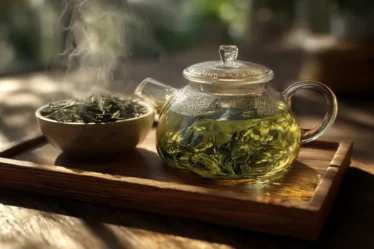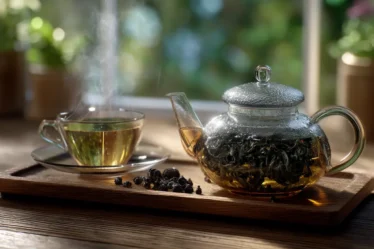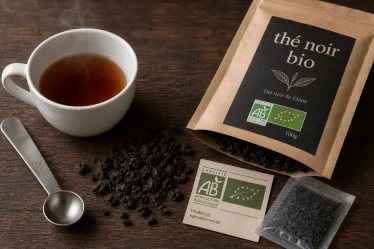

Sencha green tea benefits are usually linked to what makes this Japanese tea distinctive: steamed whole leaves, a fresh vegetal cup, and a natural mix of catechins, EGCG, amino acids, chlorophyll, and caffeine. It is not a miracle drink, but it can be a smart daily tea if you want gentle stimulation, antioxidant support, and a cleaner alternative to sugary drinks.
What makes sencha different from ordinary green tea?
Sencha is a Japanese green tea made from the leaves of Camellia sinensis, the same plant behind many green, black, white, and oolong teas. What sets Japanese sencha apart is the processing: the leaves are steamed soon after harvest to halt oxidation. This helps preserve the bright green color, fresh grassy aroma, and lively taste that people associate with Japanese green tea.
Quiz : Les bienfaits du Sencha
Unlike matcha, sencha is usually prepared as a loose leaf infusion. You steep the whole leaves in hot water, then drink the liquor rather than consuming the leaf itself as a powder. That gives sencha a lighter body and often makes it easier to drink every day than richer powdered teas.
Sencha is also a major everyday tea in Japan. One guide describes it as making up approximately 80% of Japan’s total tea production. Another discussion puts the figure at 53.6% in 2019, with an average green tea price around 470 yen per 100g over the previous 10 years. The exact framing varies, but the point is clear: sencha is not a niche ceremonial tea for specialists. It is widely consumed, practical, and familiar.
First harvest, Sincha, and Ichibancha
Sencha can come from first- and second-harvest leaves. First-harvest sencha is often called Sincha or Ichibancha, terms associated with the first picking of the year. These teas are often valued for freshness, aroma, and a more refined balance between sweetness, umami, and astringency. That does not mean every daily sencha must be first harvest, but it is a useful quality cue when comparing products.
The main health benefits associated with sencha
The strongest sencha benefits come from compounds naturally present in the leaves, especially catechin polyphenols. The best-known catechin is EGCG, short for Epigallocatechin Gallate. These compounds are widely discussed because they act as antioxidants, helping the body deal with oxidative stress. In practical terms, sencha can add antioxidant-rich plant compounds to your routine, without implying that it treats disease.
| Benefit area | Compounds often linked to it | What to expect realistically |
|---|---|---|
| Antioxidant support | Catechins, EGCG | Helps add antioxidant-rich plant compounds to your daily routine |
| Focus and clarity | Caffeine, amino acids | Gentle alertness without the heaviness of a sugary drink |
| Oral freshness | Catechins, chlorophyll | May support fresher breath and oral hygiene habits |
| Digestion after meals | Warm infusion, polyphenols | A light, unsweetened drink that can feel clean after food |
| Weight management support | Caffeine, catechins | Best seen as a supportive habit, not a stand-alone fat-loss solution |
Antioxidants, EGCG, and heart-health language
EGCG and other catechins are the reason sencha is so often described as antioxidant-rich. Benefit claims around heart health, cholesterol support, and aging are usually connected to these polyphenols. It is better to phrase this carefully: drinking sencha may contribute beneficial plant compounds to an overall healthy lifestyle, but it should not replace medical care, prescribed treatment, or a balanced diet.
Focus without turning tea into a stimulant race
Sencha contains caffeine, but many comparisons present it as lower in caffeine than matcha. That makes sense from a preparation standpoint: with sencha, the leaves are infused and removed; with matcha, the powdered leaf is consumed. Many people choose sencha when they want alertness for reading, working, or studying without the intensity they associate with stronger coffee or powdered green tea.
Think of sencha as a beverage with a pulse rather than a jolt. A good cup has rhythm: the first sip wakes the palate with grassy brightness, the middle settles into umami, and the finish leaves a fine astringent edge that resets the mouth. That sensory sequence is useful. If you drink sencha before a focused task, you are not only taking in caffeine; you are creating a small transition ritual that tells the brain, “now we begin.” For many daily drinkers, that cue is as valuable as the chemistry.
Digestion, oral hygiene, and “detox” claims
Sencha is often described as helpful after meals because it is warm, light, unsweetened, and slightly astringent. Catechins and chlorophyll are also linked in tea marketing to oral freshness, bad breath support, and hygiene. The word “detox” appears frequently around green tea, but it should be understood cautiously: sencha does not cleanse the body in a medical sense. It can, however, replace less helpful drinks and add bitter-green plant compounds to your routine.
Sencha vs matcha, gyokuro, and bancha
People searching for sencha benefits often compare it with other Japanese teas. The differences matter because processing, leaf format, and preparation affect taste, caffeine, and daily use.
| Tea | Processing and format | Taste and use |
|---|---|---|
| Sencha | Steamed whole leaves, usually not shaded, infused in water | Fresh, grassy, vegetal, good for daily drinking |
| Matcha | Shade-grown leaves ground into fine powder | Rich, intense, whisked in a bowl or used in lattes and baking |
| Gyokuro | Japanese green tea often associated with deeper umami | More luxurious, savory, and concentrated than typical sencha |
| Bancha | Often described as a cheaper daily tea from larger, rougher leaves | Milder, practical, and casual |
Why sencha may suit everyday drinkers better than matcha
Matcha is made from shaded tea leaves ground into powder and whisked with hot water, or added to smoothies, lattes, and baked goods. Because you consume the powder, matcha often feels more concentrated. Sencha, by contrast, gives you the taste and compounds of green tea through infusion. If you want a lighter cup with less preparation and a more refreshing finish, sencha is often the easier daily choice.
Where gyokuro and bancha fit
Gyokuro is often described by tea enthusiasts as a step above sencha for maximum umami. It can be wonderful, but it is not always the most casual or budget-friendly option. Bancha sits at the other end of the spectrum: a simple daily drink, often made from larger and rougher leaves. Sencha occupies the useful middle ground, with enough complexity to stay interesting and enough accessibility to drink often.
What sencha tastes like when brewed well
Good sencha has a fresh, grassy, and vegetal profile, sometimes with oceanic, seaweed, citrus, or creamy notes depending on origin and processing. The finish can be naturally sweet, umami-rich, and slightly astringent. That astringency is not a flaw when balanced; it gives sencha its clean, mouthwatering snap.
If your sencha tastes harsh, bitter, or flat, the problem may be brewing rather than the tea itself. Green tea leaves are delicate. Water that is too aggressive can emphasize bitterness and bury the sweetness. A shorter infusion often reveals the fresher side of the leaf.
Quality cues before buying
Look for clear information on Japanese origin, harvest season, region, and processing. Organic status can be reassuring if that matters to you, but it is not the only marker of quality. First-harvest, Sincha, or Ichibancha labels suggest a fresher and often more exclusive tea. Avoid judging sencha only by added flavorings; a good loose leaf sencha should have its own aroma, color, and structure.
- For beginners: choose a balanced sencha with fresh vegetal notes, not the most expensive gyokuro-like option.
- For matcha drinkers: expect a lighter body, more clarity, and less creamy intensity.
- For daily use: prioritize freshness, storage quality, and a taste you will actually want every day.
How to brew and drink sencha safely every day
Sencha can be brewed in a teapot, a cup, or a Japanese yunomi. Use loose leaves, add hot water, steep briefly, then pour fully so the leaves do not continue extracting. It can also be cold-brewed, which brings out sweetness and reduces sharp bitterness. Cold sencha is especially pleasant when you want a clean, refreshing drink without sugar.
- Add loose sencha leaves to a pot or cup.
- Use hot water rather than boiling water for a smoother cup.
- Steep briefly, tasting until the balance feels fresh, grassy, and lightly umami.
- Pour the tea completely, then re-steep the leaves if they still have aroma.
- For cold brew, infuse the leaves in cold water until the liquor tastes sweet and refreshing.
Can you drink sencha every day? For most healthy adults, moderate daily green tea intake is a reasonable habit. The main caution is caffeine sensitivity. If caffeine affects your sleep, anxiety, or digestion, drink sencha earlier in the day or reduce the amount. If you are pregnant, taking medication, managing a health condition, or trying to treat a specific symptom, ask a healthcare professional for personal guidance.
Sencha works best when treated as a daily ritual, not a cure. Its benefits come from consistency, quality leaves, careful brewing, and the simple fact that a fresh unsweetened tea can replace less balanced choices. Enjoy it for its flavor first; the wellness value follows more naturally that way.